
Customer reviews can play an important role in helping website visitors understand what other customers think about a business, product, or service. Instead of sending visitors to third-party platforms, businesses can display reviews directly on their websites using dedicated tools and widgets.
There are many tools to display reviews on website pages, ranging from simple review widgets to complete platforms that collect, manage, moderate, and aggregate customer feedback from multiple sources.
In this guide, we’ll compare some of the popular review tools for websites, explain the features to look for, and show you how to add Google Reviews to your website.
What Are Review Display Tools?
Review display tools are software platforms that allow businesses to collect or import customer reviews and display them on their websites.
Depending on the platform, you may be able to connect reviews from sources such as:
- Yelp
- Tripadvisor
- Amazon
- Trustpilot
- Other review platforms
These tools can turn customer feedback into website widgets such as review grids, sliders, carousels, badges, and testimonial sections.
For businesses that receive reviews across multiple platforms, review aggregation can also make it easier to manage feedback from one place.
7 Best Tools to Display Reviews on Your Website
Here are some popular options businesses can consider when looking for review tools for websites.
1. Taggbox
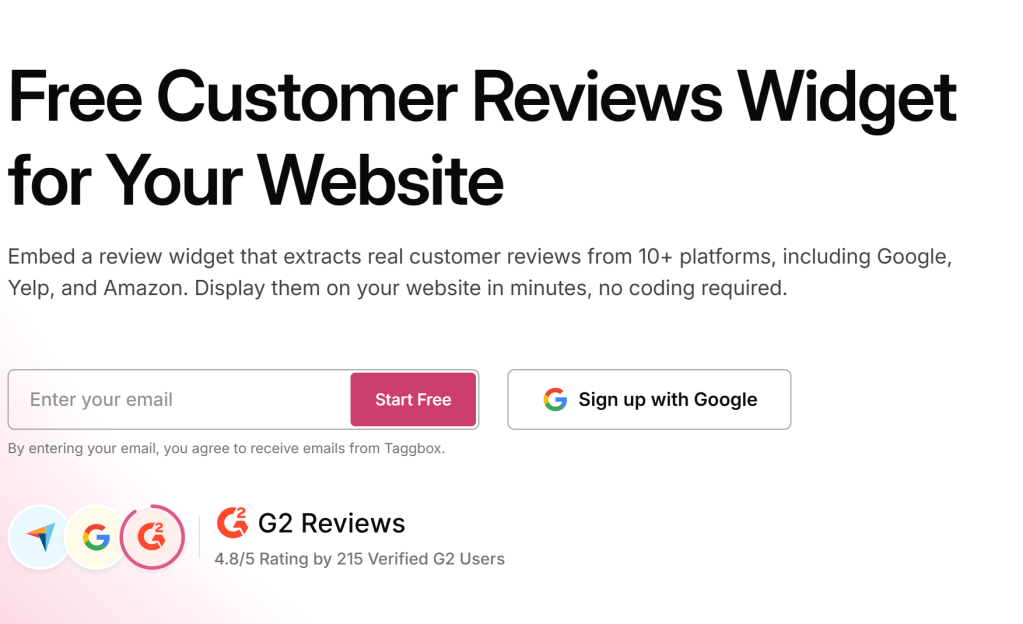
Best for: Businesses that want customizable review widgets and multi-source review aggregation.
Taggbox is a UGC and social proof platform that allows businesses to collect and display reviews from different sources on their websites.
Its Google Reviews widget lets you connect your Google Business Profile, select your reviews, customize the widget, and embed it on your website.
You can choose from different layouts and customize elements such as colors, fonts, cards, spacing, and buttons.
Key features
- Google Reviews integration
- Multiple review sources
- Review aggregation
- Customizable layouts
- Review moderation
- Analytics
- Multiple locations
- “Write a Review” CTA
- No-code embedding
Taggbox can be useful for businesses that want more than a basic review feed and need control over how customer feedback appears on their website.
2. Trustindex
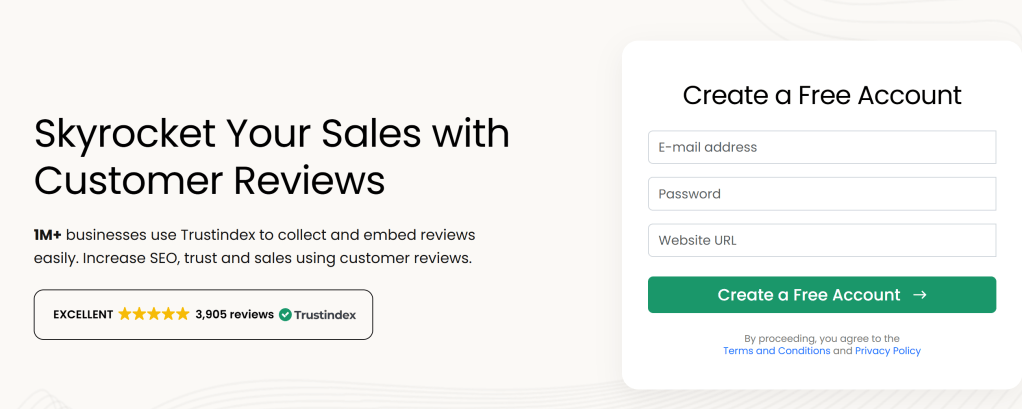
Best for: Businesses looking for dedicated review widgets.
Trustindex provides tools for collecting and displaying reviews from multiple platforms.
Its widgets can display Google reviews through different layouts, including sliders, grids, and lists.
Key features
- Google review integration
- Multiple templates
- Review widgets
- Responsive designs
- Multiple review sources
- WordPress integration
Trustindex is particularly useful for businesses that want dedicated review display functionality without building their own integration.
3. Smash Balloon

Best for: WordPress websites that need social feeds and reviews.
Smash Balloon offers plugins for displaying content from different social platforms on WordPress websites. Its Reviews Feed product allows businesses to showcase customer reviews from supported review platforms.
Key features
- Review feeds
- Google Reviews support
- Multiple sources
- Responsive layouts
- Customizable designs
- WordPress integration
It’s worth considering if you’re already using WordPress and want review functionality alongside other social media feeds.
4. EmbedSocial

Best for: Managing reviews and social proof from different sources.
EmbedSocial provides tools for collecting, managing, and displaying customer reviews through website widgets.
Businesses can use customizable widgets to showcase feedback on websites and landing pages.
Key features
- Google Reviews
- Review aggregation
- Customizable widgets
- Multiple layouts
- Review management
- Social proof tools
This makes it useful for businesses that want to manage customer feedback across multiple channels.
5. Elfsight

Best for: Businesses looking for customizable website widgets.
Elfsight provides no-code widgets for websites, including review and testimonial widgets.
You can customize the appearance of the widget and embed it on different website platforms.
Key features
- Google Reviews widget
- Review layouts
- Customization
- Responsive design
- No-code installation
- Website integrations
Elfsight can work well for businesses that want a simple widget-building experience.
6. WP Social Ninja

Best for: WordPress websites that need social feeds and review widgets.
WP Social Ninja combines social media feeds, reviews, testimonials, and other website widgets within one WordPress plugin.
Businesses can use it to display Google reviews and other social proof directly on WordPress pages.
Key features
- Google Reviews
- Social feeds
- Review widgets
- Testimonials
- Multiple layouts
- WordPress integration
It may be a suitable option if your website needs several types of social content rather than reviews alone.
7. RichPlugins

Best for: Businesses looking for review widgets for WordPress.
RichPlugins offers WordPress plugins for displaying reviews and ratings from different platforms.
Its review widgets can be displayed using layouts such as sliders, grids, and lists.
Key features
- Google Reviews
- Review widgets
- Multiple layouts
- WordPress support
- Customization
- Multiple review sources
Learn How You Can Display Google Reviews
Watch this video to learn how to embed Google Reviews on a website. You’ll see how to connect your Google reviews, customize their appearance, and add the review widget to your website.
What Features Should You Look for in Review Display Software?
Choosing the right review display software depends on how you collect, manage, and display customer feedback.
Here are some features worth considering.
1. Multiple Review Sources
If customers leave reviews on Google, Facebook, Yelp, or other platforms, choose a tool that supports the sources you actually use.
A multi-source platform can bring feedback together instead of requiring separate widgets for every platform.
2. Customizable Review Widgets
Look for review widget software that lets you change the appearance of your review section.
Useful customization options include:
- Colors
- Fonts
- Backgrounds
- Review cards
- Spacing
- Number of reviews
- Star ratings
- Buttons
- Layouts
Your review widget should match the visual style of your website.
3. Responsive Design
A review widget should work properly across:
- Desktop
- Mobile
- Tablet
Mobile responsiveness is especially important because review cards can easily become difficult to read when displayed on smaller screens.
4. Review Moderation
If your business receives a large number of reviews, moderation can help you control which reviews appear on your website.
Some platforms also provide filtering tools that allow businesses to organize reviews based on rating, source, or other criteria.
5. Easy Embedding
The easier the installation, the less technical work is required.
Look for tools that support:
- HTML embed code
- JavaScript
- WordPress plugins
- Shortcodes
- Gutenberg blocks
- Page builders
6. Review Aggregation
Review aggregation tools can collect feedback from multiple review platforms and present it through one widget.
For example, a business could potentially combine Google, Facebook, and other supported reviews into a single section.
This can save time when managing customer feedback across several platforms.
Where Should You Display Customer Reviews?
The placement of reviews can depend on the purpose of the page.
Homepage
Showcase a few strong customer reviews near your products, services, or main CTA.
Product Pages
Display relevant customer feedback close to product information.
Service Pages
Reviews can provide additional context about customer experiences with a particular service.
Landing Pages
A review section can add social proof to conversion-focused landing pages.
Contact Pages
Displaying your rating and customer feedback can give visitors additional information before contacting your business.
Location Pages
Multi-location businesses can display reviews relevant to individual locations where supported by their review platform.
Review Widget vs. Manual Review Display
Businesses can manually copy customer reviews into website pages, but this approach requires ongoing maintenance.
Every time new reviews are published, someone has to update the website.
Using website review tools can simplify this process by connecting your site to supported review sources and displaying updated content through a widget.
This is especially useful for businesses that receive reviews regularly.
How to Choose the Right Review Tool for Your Website
There isn’t one tool that fits every business.
Before choosing a platform, consider:
For a small business
Look for an easy-to-use tool with Google Reviews, basic customization, and simple embedding.
For an e-commerce website
Prioritize review layouts that work well on product and landing pages.
For a multi-location business
Look for review aggregation, location management, filtering, and centralized review management.
For a WordPress website
Check for WordPress plugins, Gutenberg support, Elementor compatibility, and shortcode or widget options.
For a business using multiple review platforms
Choose a tool that supports the review sources you use and can bring them together through one interface.
Final Thoughts
The right review tool can make it easier to bring customer feedback from third-party platforms directly onto your website.
Simple review tools for websites may be enough if you only need a basic Google Reviews widget. Businesses managing reviews across multiple platforms may benefit from review management tools or review aggregation tools that provide broader functionality.
Before choosing a platform, compare its supported review sources, widget designs, customization, moderation, embedding options, mobile responsiveness, and pricing.
And if you want to see the setup in action, watch the video above to learn how to add Google Reviews to your website step by step.
Frequently Asked Questions
What are the best tools to display reviews on a website?
Popular options include Taggbox, Trustindex, Smash Balloon, EmbedSocial, Elfsight, ReviewsOnMyWebsite, WP Social Ninja, RichPlugins, and Birdeye. The right choice depends on the review sources, customization, moderation, and management features you need.
Can I display Google Reviews without coding?
Yes. Many review tools provide no-code or low-code installation through plugins, widgets, shortcodes, or copy-and-paste embed code.
Can I display reviews from multiple websites?
Yes. Many review aggregation platforms support multiple review sources, allowing businesses to combine customer feedback from supported platforms into a website widget.
Are review widgets mobile-friendly?
Most modern review widgets are designed to be responsive, but you should always test the widget on desktop, tablet, and mobile before publishing.

 Widgetbox
Leave a comment